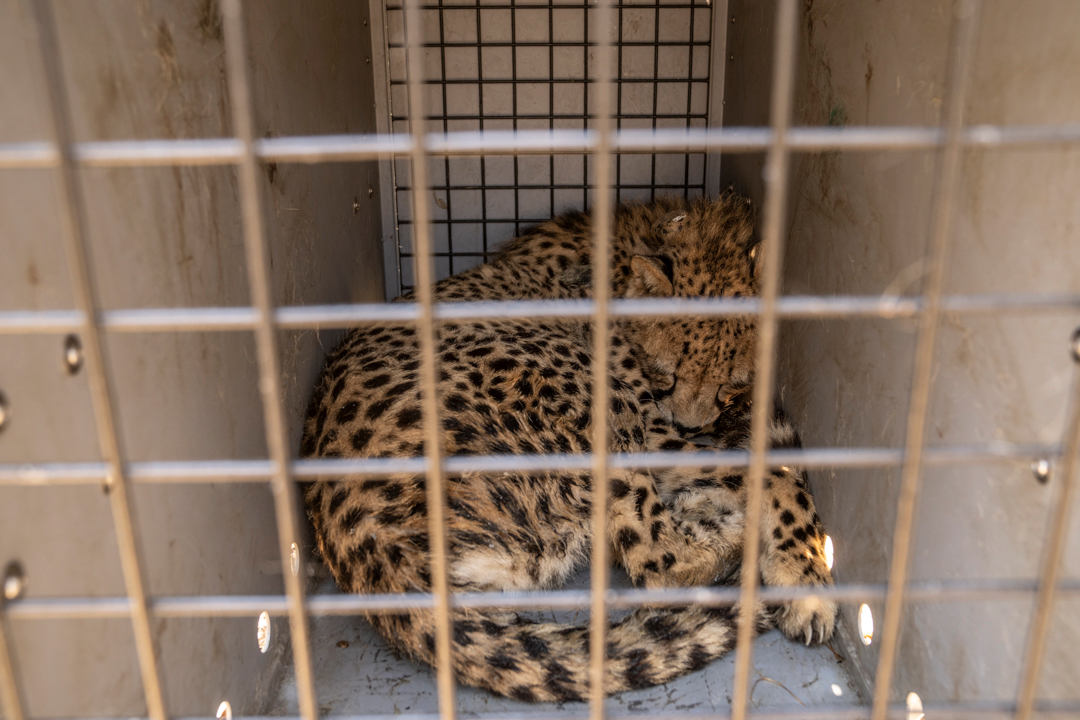
The Zambezi Valley is famous for a few things, but cheetahs are not one of them. In fact, we think there may be one resident cheetah left.
Like so many times before, we wanted to change that!
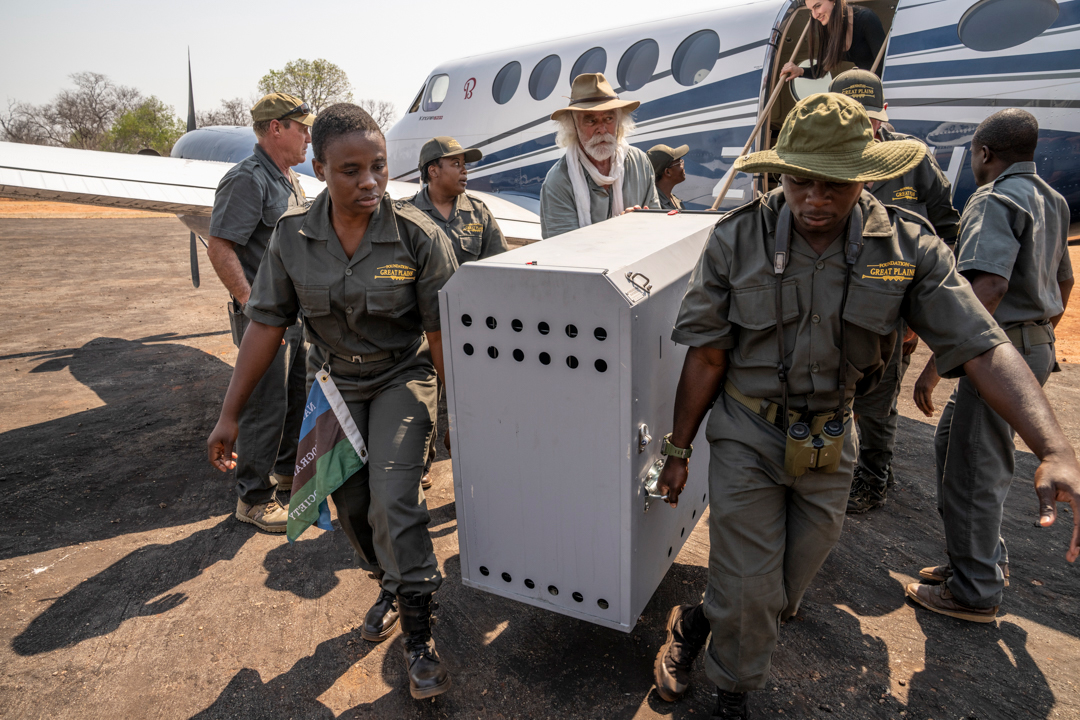
Last week, we stood waiting on a black, melting tarmac runway, looking up at the sky for the first sign of two charter planes. We were hosting!
The passengers, however, were not guests, but two loads of cheetahs on their way to freedom at Tembo Plains. Many of you will have heard and followed our ReWilding project, and we are just about up to 1,000 animals being released now; each event a tremendous success, but how long can a good run, run?
I suspect that our female rangers had a private competition between them about who would see or hear the whine of the turbine engines first, them or the male rangers. The women did. It wasn’t exactly as great a test as the recent was for them, because the planes were exactly on time at 9:30 am when the first King Air twin-engine plane landed.
We were worried about the heat, so I seconded our Great Plains refrigerated truck that we use for transporting fresh vegetables and other food to camp, emptied it, painted it overnight (it was white…now it’s green) and loaded 6 cheetahs from an air-conditioned plane to as cool a truck as possible.
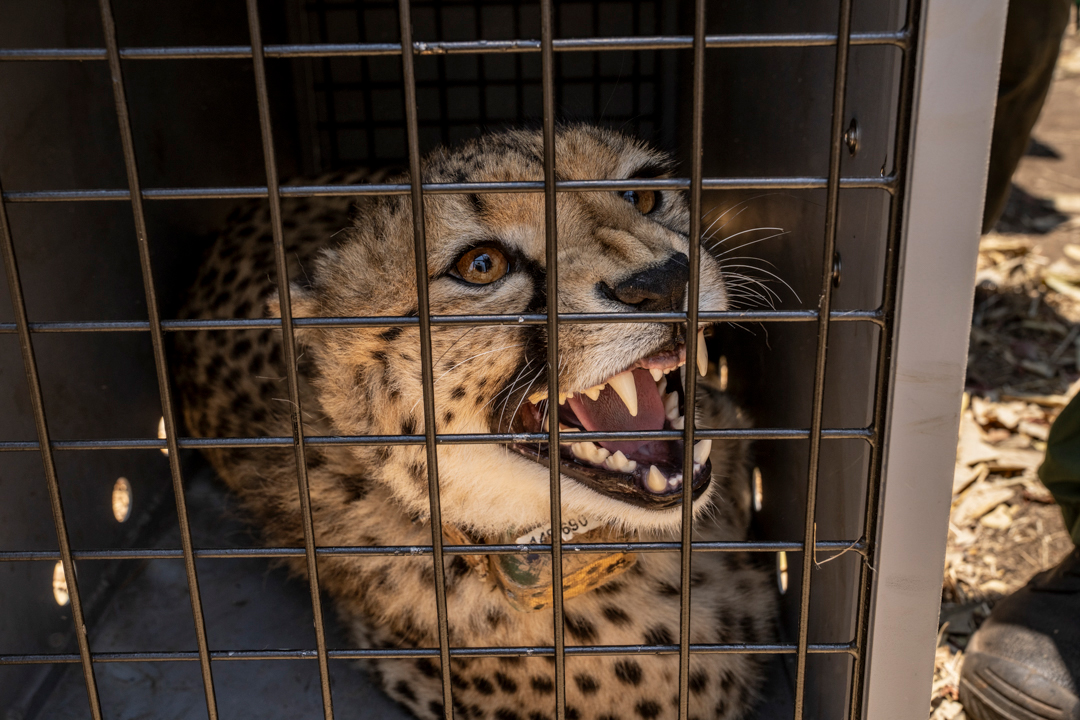
We had built what are generally called temporary bomas (pens to hold the cats in for a month), but I had no idea just how temporary they would be!
As Beverly and I went through the routine of opening each crate and releasing one cheetah at a time, one male bolted, saw the fence, used the chain link as a ladder and was over in a few seconds – twenty-nine days, twenty-three hours and fifty-seven seconds early! Gone!
He was a part of a coalition of three, so we decided to break protocol and release the other two brothers immediately.
The three, all GPS’d up, went off in an arc, and data showed they eventually met up two days later. They have already started chipping away at the impala we brought in.
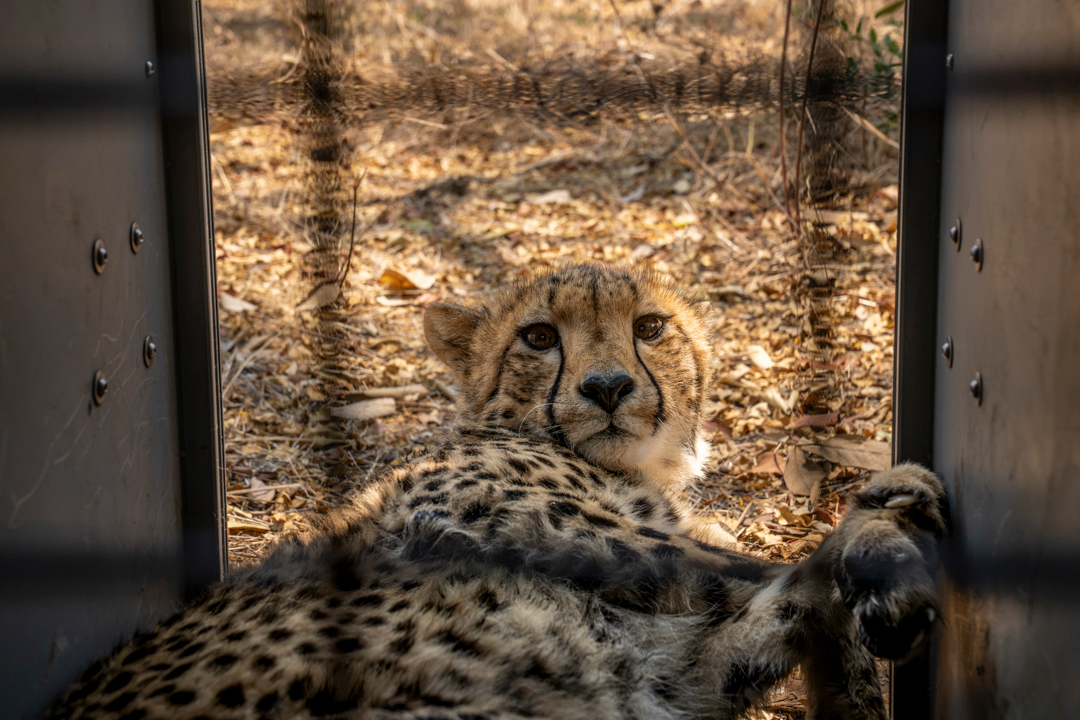
That left three in captivity.
The one female in her own isolated section was fed early because she was awake but more vulnerable due to her delicate body size. Then, the next day we saw something incredible. Something I have not seen happen in forty years. When we fed one of the males in his own pen at the far end, the female called one of their subtle (seductive) chirping calls; he ran to her, and through the fence rubbed heads, then ran back to his food and lifted it, dragged it all the way to the chain-link fence between them where he ‘gave it’ to her. She fed through the fence quite effectively.
Predators may hunt collaboratively, but they compete on the kill. Cheetahs are less intense about this because they usually kill prey larger than they can eat. But to see a male actively present food to a female is unheard of.
Inadvertently, we have created the ideal cheetah release scientific control for our PhD student to study; one where we have ‘hot’ released three individuals, and at the same time kept three in pens for the required settling-in period of 30 days. Depending on the results of which adapt faster and better to this new environment, we will be able to write up a new protocol or best practice for releasing cheetahs.
As you know, cheetahs are under dire threat, with much fewer than the estimated 7,000 left on the planet, in our opinion. Just checking the IUCN estimate for the Zambezi Valley with a few hundred is indicative. There are three. Well, now there are nine!
Yesterday we elected to allow the male and female to join up, and they are lying together, grooming. So, this week, probably as you read this, we may release these two so they can have some privacy for their nuptials. Always respectful.
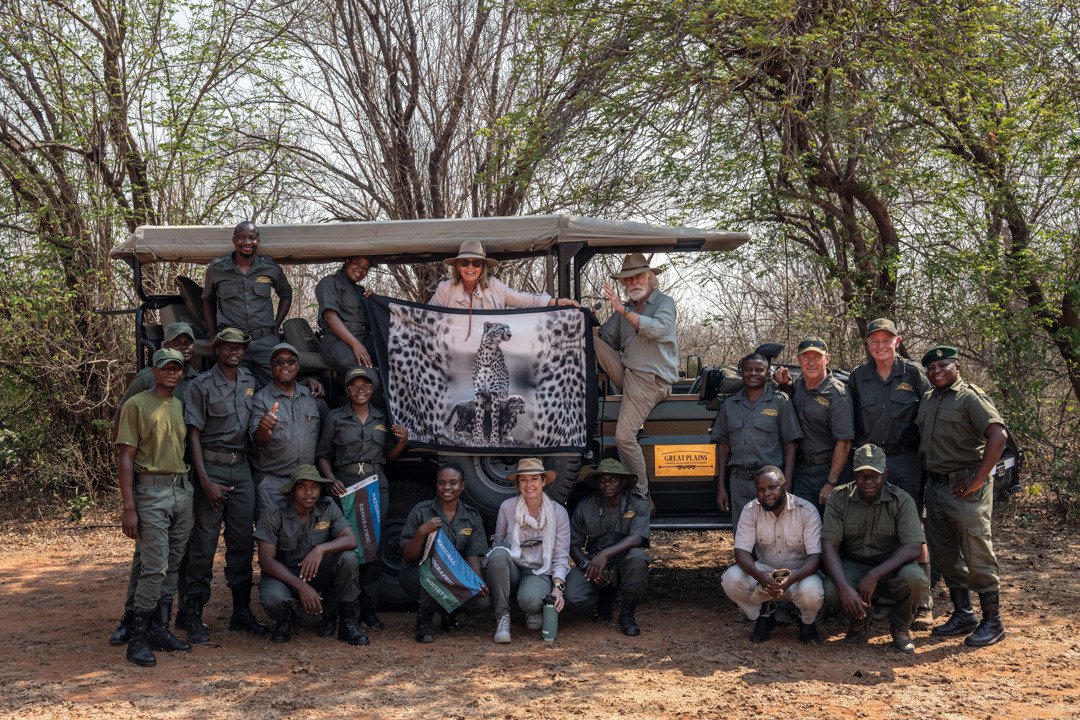
A special thank you to everyone who supported this reintroduction; we are doing something positive for the planet each day, together.